Hello there!
Need Help? We are right here!

Need Help? We are right here!
Search Results:
×
x
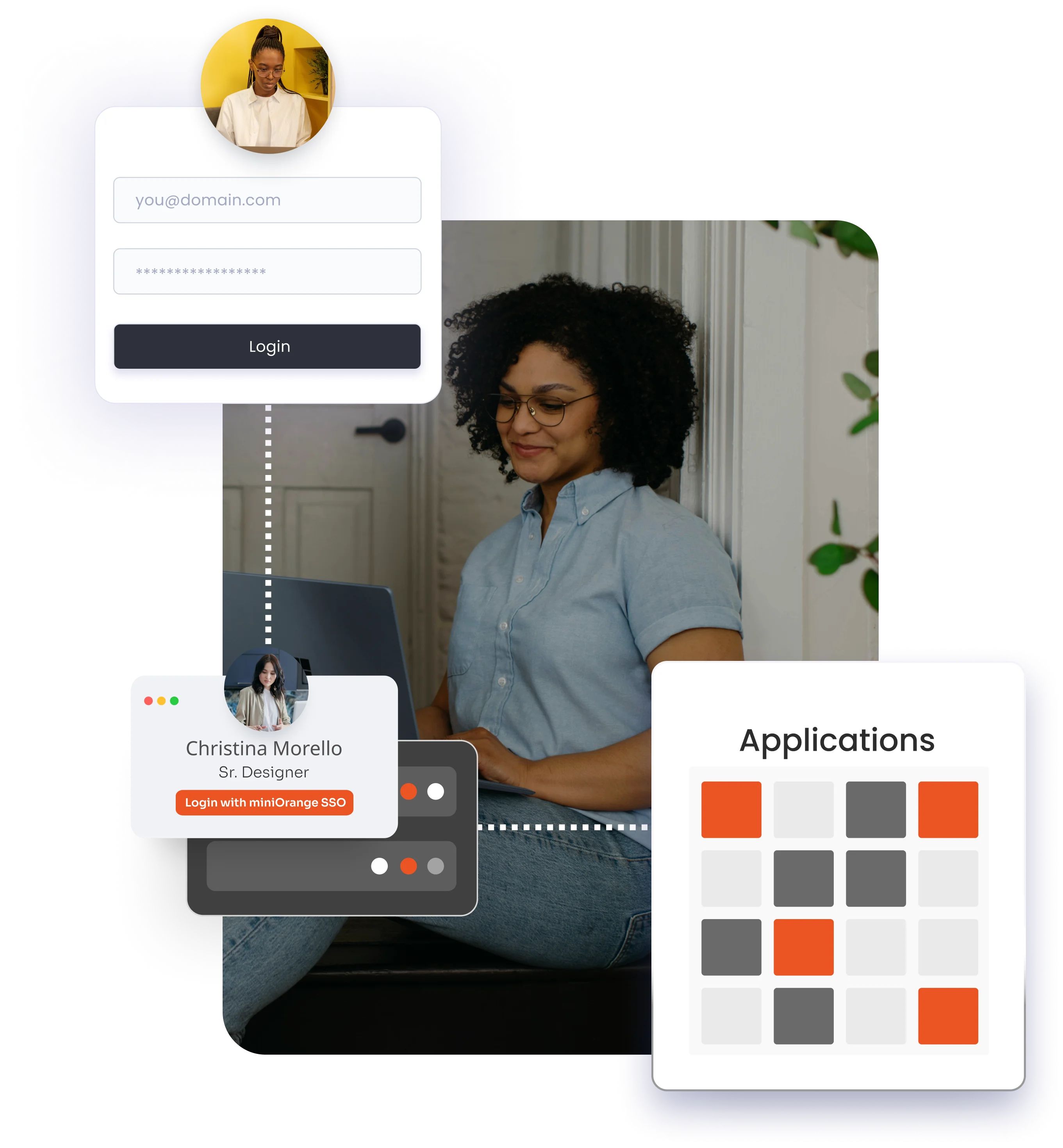
Self-hosted SSO is an authentication model in which organizations deploy and manage their own single sign-on infrastructure instead of relying on an external identity provider. Users sign in once and gain access to all authorized applications without managing multiple credentials.
Unlike cloud-based deployments, authentication requests are processed within the organization's data center, private cloud, or hybrid environment. This approach allows enterprises to integrate existing directories, support legacy systems, and align authentication with internal IT requirements.

Provide employees with a single login experience across cloud platforms, internal applications, VPNs, and legacy systems that traditionally operate in separate environments.

Deploy authentication services across private clouds, data centers, hybrid infrastructures, and air-gapped networks without changing existing workflows.

Extend authentication to applications using Active Directory, LDAP, databases, and custom repositories without migrating users to a new platform.

Deploy authentication services in environments with strict residency, network isolation, and operational requirements.

Eliminate password fatigue and multiple login prompts by centralizing authentication across the organization.

Create consistent authentication policies and user experiences across departments, teams, and business units.
Authentication
Support single sign-on, passwordless login, multi-factor authentication, and adaptive authentication to deliver a secure and seamless login experience across enterprise applications.
Identity Integration
Integrate with Active Directory, LDAP, Azure AD, SQL databases, and custom user stores to centralize authentication without replacing existing identity systems.
Security Controls
Configure session policies, conditional access, device trust, and risk-based authentication to verify users and protect sensitive resources.
Administration
Manage users, roles, permissions, audit logs, and lifecycle workflows from a centralized administrative console.
High Availability
Ensure uninterrupted authentication with load balancing, failover mechanisms, disaster recovery capabilities, and multi-node deployments.
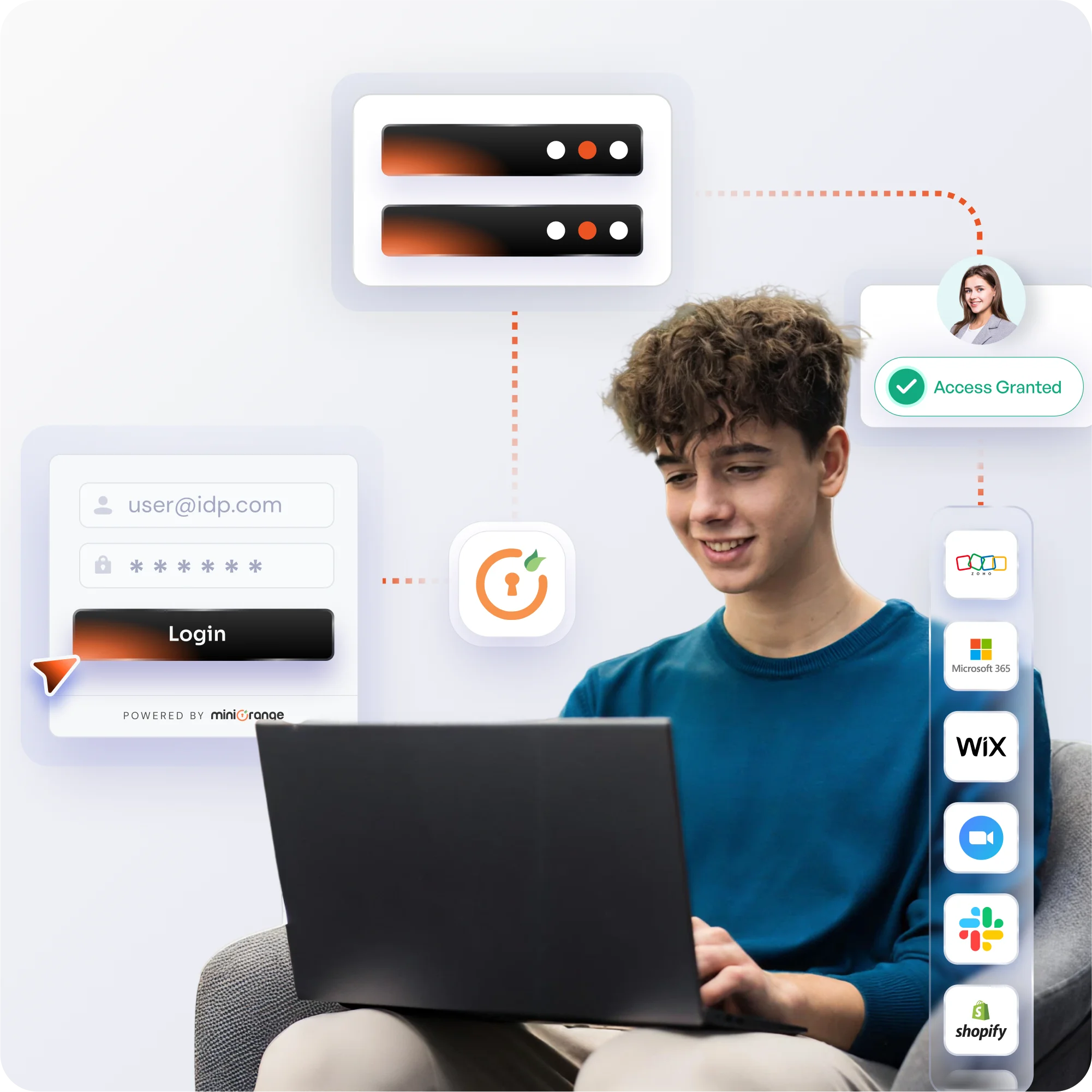
A user attempts to access an enterprise application, whether hosted on-premises or in the cloud.
When organizations need authentication that aligns with existing infrastructure, supports legacy systems, and offers deployment flexibility, self-hosted SSO provides greater operational control than cloud-managed alternatives.
Compare
Self-Hosted SSO
Cloud-Based SSO
Managed internally
Managed by the vendor
Private cloud or on-premises
Vendor cloud
Organization-owned
Vendor-managed
Extensive
Limited
High
Moderate
Customer-controlled
Vendor-controlled
Internal teams
Vendor
Infrastructure dependent
Elastic scaling
Optional
Required
Customer-defined
Vendor-defined
Deploy miniOrange on virtual machines, bare-metal servers, Kubernetes clusters, private clouds, or hybrid environments based on your infrastructure requirements.
Connect more than 6,000 applications using SAML, OAuth, OpenID Connect, LDAP, RADIUS, and other industry-standard protocols.
Support high availability, load balancing, failover, and multi-node deployments designed for large organizations and mission-critical environments.
Move users, applications, and authentication policies from existing IAM solutions without disrupting business operations.
Both deployment models can be secure when configured correctly. However, self-hosted SSO gives organizations greater control over authentication infrastructure, security policies, and data storage, making it a preferred choice for highly regulated environments.
Yes. miniOrange self-hosted SSO integrates with Active Directory, LDAP, Azure AD, SQL databases, and custom user repositories to centralize authentication.
Yes. miniOrange supports deployment on Kubernetes clusters, virtual machines, bare-metal servers, private clouds, and hybrid infrastructures.
miniOrange supports SAML 2.0, OAuth 2.0, OpenID Connect, LDAP, RADIUS, and other industry-standard authentication protocols.
Yes. The miniOrange self-hosted SSO server can integrate with legacy, custom, and modern applications using standards-based protocols, connectors, and agents.