Hello there!
Need Help? We are right here!

Need Help? We are right here!
Search Results:
×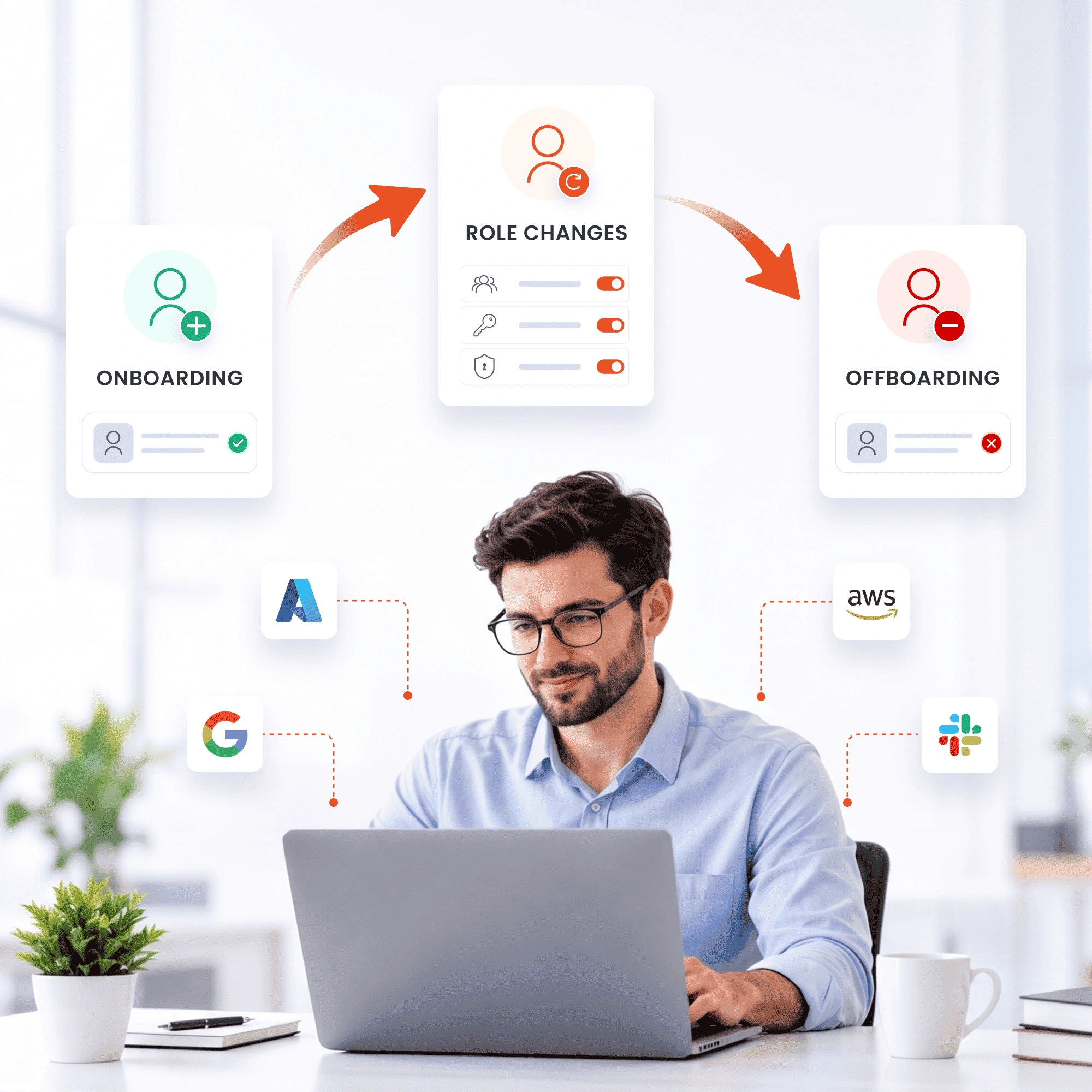
Manual user onboarding and offboarding is a steep climb. Identity Lifecycle Management Solution automates every stage of the identity management lifecycle to ensure users get the right access at the right time and lose it instantly when they leave.
User provisioning gives new employees the access they need without you having to create every account by hand.
Ensure every promotion or job transfer updates access and permissions while stripping away old ones.
Access and permissions should not leave with an employee. Deprovision the user’s accounts immediately during offboarding.
Simplify onboarding, role changes, and offboarding with automated identity provisioning and deprovisioning
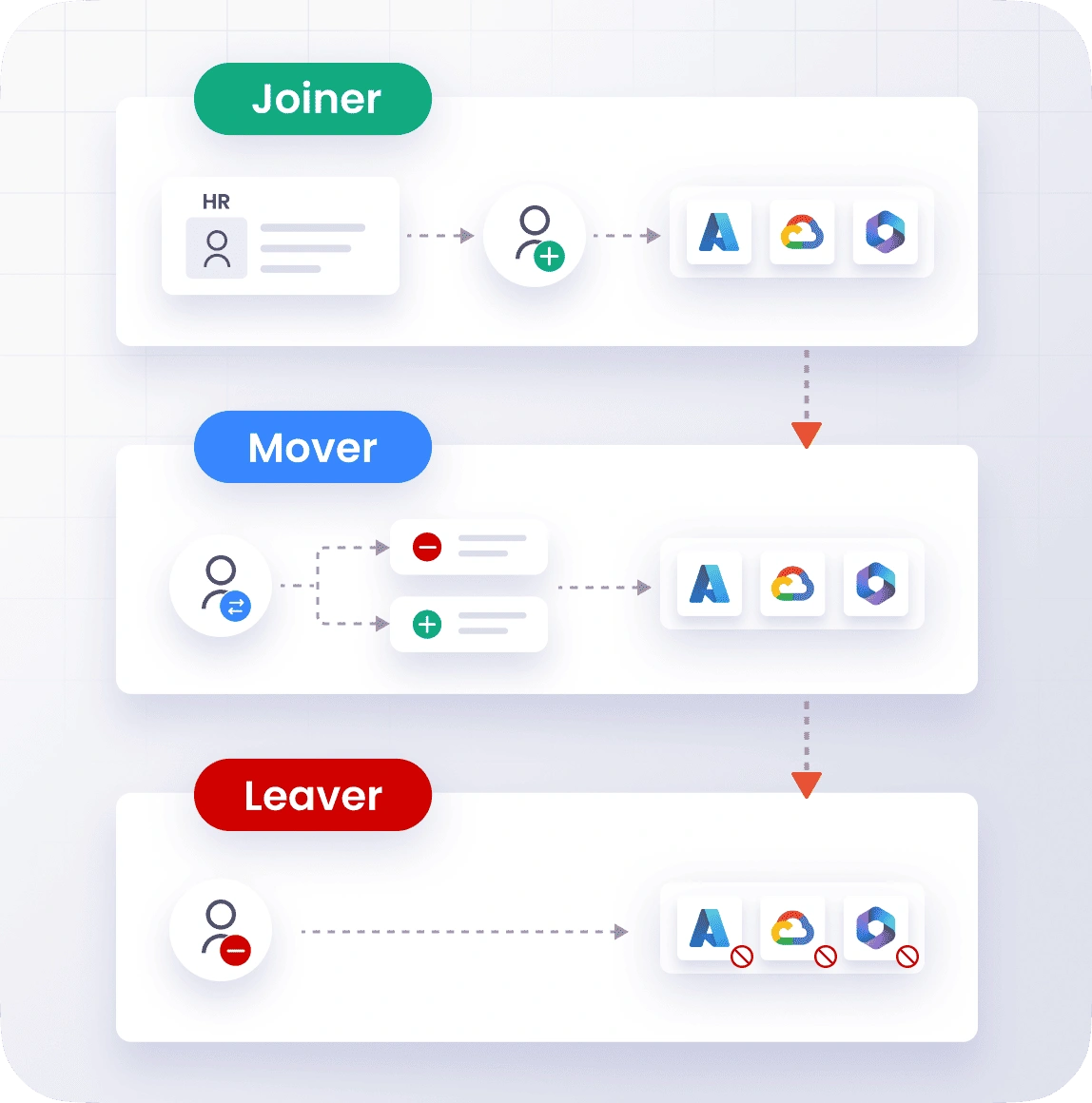
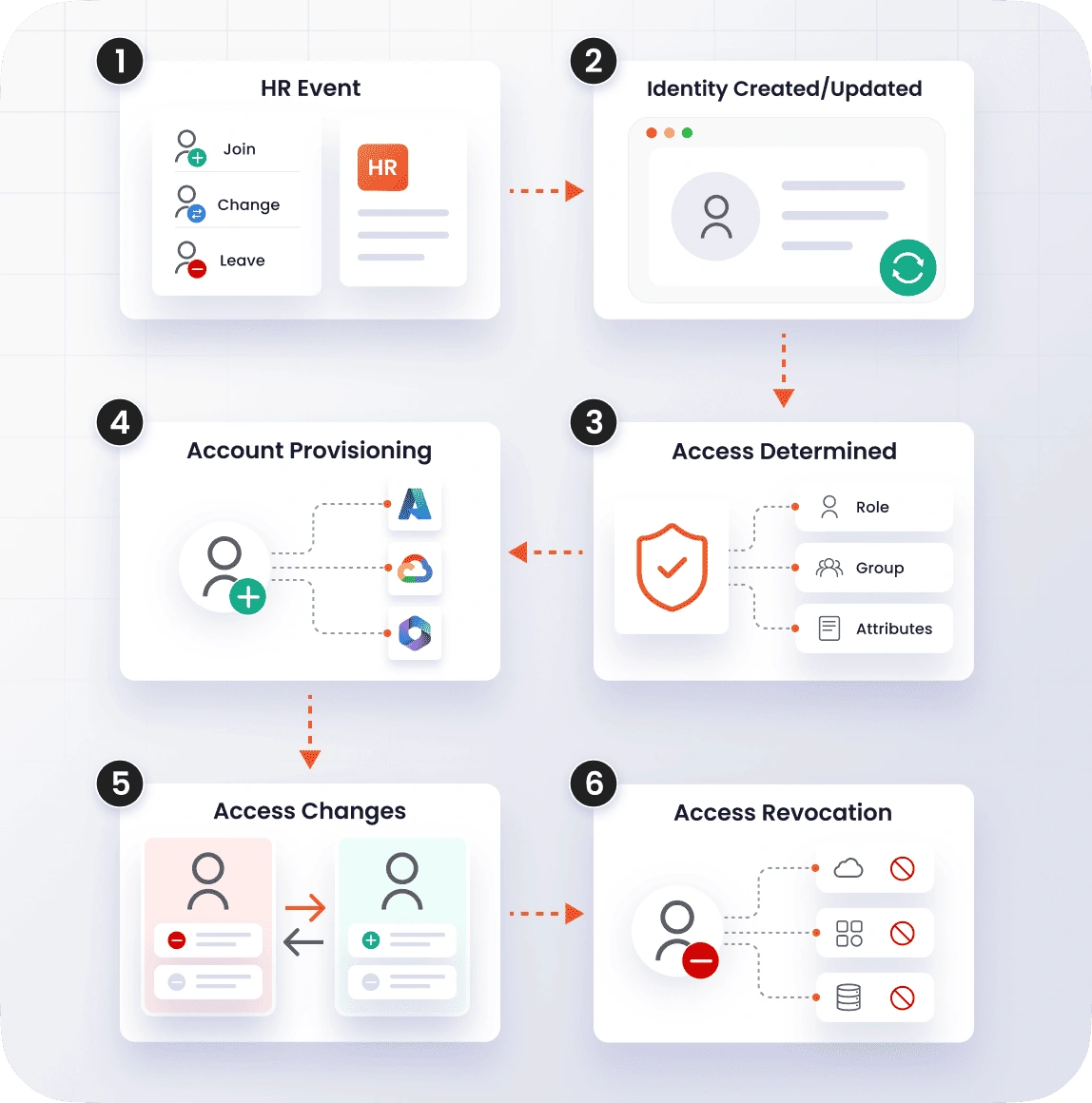
The identity lifecycle management process connects employee events to the identity and access changes they trigger.
An employee joins, changes roles, transfers departments, or leaves the organization. These changes initiate the identity lifecycle management process.
The user’s identity is created or updated based on information from the HR system, Identity Provider (IdP), or other source. Relevant details such as department, role, location, and employment status are synced across connected systems.
Access requirements are evaluated based on the user’s role, group membership, department, and other attributes. This helps ensure that users receive access appropriate to their responsibilities.
User accounts, groups, and application access are provisioned across connected directories and applications. Automated provisioning reduces manual setup and helps new or transferred employees get the access they need.
When a user’s role, department, or responsibilities change, their access is updated accordingly. Outdated permissions can be removed while new access is provisioned.
When a user leaves the organization or no longer needs access, their accounts and permissions are deprovisioned. This helps reduce orphaned accounts and limits unnecessary access.
Get centralized control across SaaS applications, Active Directory, cloud services, legacy applications, and custom systems running side by side.
Automate SCIM provisioning for Salesforce, Google Workspace, Microsoft 365, Slack, and other cloud applications.
Connect legacy software, custom databases, local directories, and on-premises systems without rebuilding infrastructure.
Extend identity provisioning and attribute synchronization to custom applications with flexible identity workflows.
Manage identity access across AWS, Azure, Google Cloud, and enterprise data centers with unified lifecycle management.
miniOrange identity lifecycle management software is built to replace manual administration with intelligent, automated governance.
Create user accounts and assign the required access upon hire without relying on manual, application-by-application setup.
Instantly disable accounts and revoke application access during offboarding to prevent data leaks.
Use roles, groups, departments, locations, and other user attributes to determine and manage access across connected systems.
Keep user information synchronized across directories and applications so changes do not have to be entered repeatedly.
Automate common identity management tasks across onboarding, role changes, transfers, and offboarding.
Review existing access to identify permissions that may no longer be appropriate and support stronger access governance.
Our identity lifecycle management solution provides a flexible, enterprise-grade identity lifecycle management solution tailored to your technical architecture.

Reduce manual work across onboarding, role changes, and offboarding with automated provisioning and deprovisioning workflows.

Integrate HR systems, directories, and applications so identity data can move across the systems you already use.

Keep identity information, be it human or non-human, and lifecycle processes organized across multiple directories and applications.

Use provisioning, deprovisioning, group synchronization, and attribute mapping to manage identity data across connected systems.

Bring service accounts, machine identities, workload identities, bots, and APIs into your broader identity management strategy.

Manage identities across cloud and on-premises applications and directories from a connected identity management setup.
Deploy identity lifecycle management across cloud, on-premises, or hybrid environments to fit your organization's infrastructure and access requirements.
Automate day-one provisioning for hires and instant access revocation for departures.
Adjust application access instantly when an employee changes teams, departments, or is promoted.
Manage contractor identities and access as external workers join, change roles, or leave.
Keep partner identities organized and ensure access changes when their relationship with your organization changes.
Connect identity events with provisioning workflows to simplify access management across applications.
Apply lifecycle controls to non-human identities that access applications, systems, and services.
The primary identity management lifecycle steps include onboarding (Joiner), updates and role changes (Mover), and offboarding or account revocation (Leaver).
Identity lifecycle management software automates identity creation, directory synchronization, role-based access control, and deprovisioning across on-premises, cloud, and hybrid IT infrastructures.
Identity lifecycle management automation triggers automated workflows based on events from your HR software or identity provider, instantly adjusting user permissions across all connected tools without manual intervention.
Non-human identity lifecycle management focuses on governing machine identities, service accounts, automated bots, workload credentials, and API connections to prevent unmonitored backdoor access.
Automate identity and access changes across HR systems, directories, and applications with miniOrange. Keep identities synchronized, reduce manual work, and make lifecycle management easier to control.
Identity lifecycle management focuses on operational provisioning, access adjustments, and deprovisioning user accounts and access, whereas identity governance emphasizes compliance, risk management, access certification, and policy enforcement across identities.