Hello there!
Need Help? We are right here!

Need Help? We are right here!
Search Results:
×
Explore comprehensive PAM features, integration methods, compliance benefits, and everything you need in one place.
Your download should start now. If not, please email us at idpsupport@xecurify.com.
Please enter a valid email-id

Financial institutions must comply with numerous regulatory frameworks, including SWIFT CSP, PCI DSS, SOX, GDPR, NCUA for credit unions, 23 NYCRR 500 for New York operations, RBI cybersecurity guidelines for Indian banks, SAMA cybersecurity and compliance requirements in Saudi Arabia, and FISMA/NIST for federal government engagements. Regional standards across the UAE, Saudi Arabia, and other GCC territories further add to regulatory complexity.
Privileged Identity Management streamlines compliance through automated audit trails, real-time session recordings, and detailed regulatory reporting that satisfy examination requirements, enabling financial institutions to demonstrate adherence across all applicable frameworks.
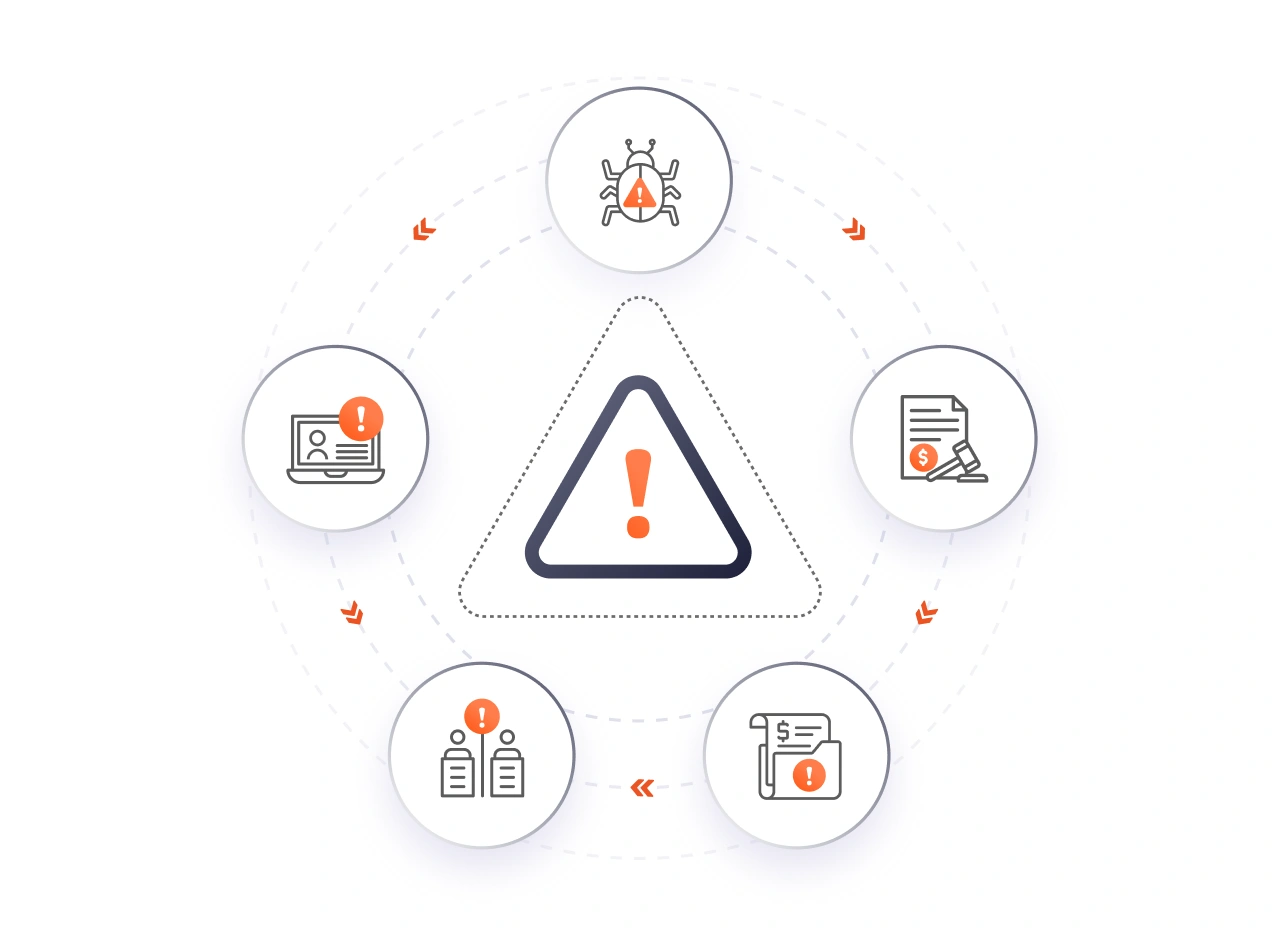
The absence of a centralized PAM solution for banks leaves financial institutions vulnerable to privileged account misuse,
cyberattacks, and regulatory non-compliance.
Unprotected privileged accounts provide direct access to core banking infrastructure, enabling attackers to encrypt critical financial data and demand millions in ransom while disrupting customer services and transaction processing.
Without privileged access controls, malicious insiders can abuse elevated permissions to steal customer data, manipulate financial records, or even transfer funds, proving 60% of financial breaches involve insider access.
Lack of role separation enables single individuals to initiate, approve, and execute high-value transactions, creating opportunities for fraud and violating regulatory compliance requirements across trading and banking operations.
Unmanaged privileged accounts provide unrestricted access to customer PII, payment records, and proprietary trading algorithms, leading to data breaches that can result in identity theft and competitive intelligence loss.
Uncontrolled privileged access for third-party vendors and service providers increases the risk of unauthorized system changes, data exposure, and supply-chain attacks within banking environments.
Non-compliance with banking or financial regulations due to inadequate privileged access controls can result in millions in penalties, regulatory sanctions, and potential loss of operating licenses.
With miniOrange Privileged Identity Management, financial institutions maintain strict financial compliance,
control privileged accounts, and monitor critical activities across banking systems.
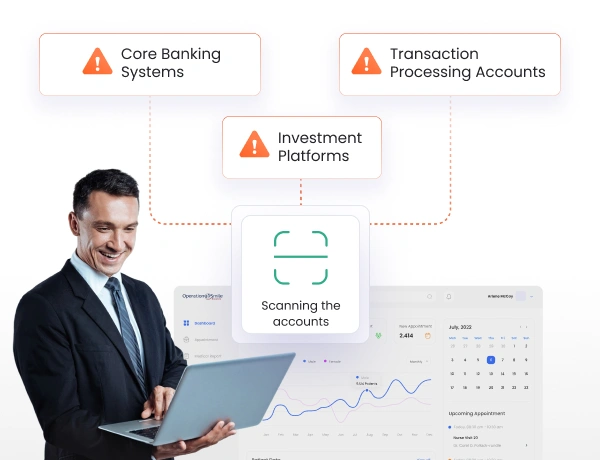
Automatically identifies and catalogues privileged accounts across core banking systems with Automatic Discovery of Privileged Accounts functionality to eliminate security blind spots.
Learn more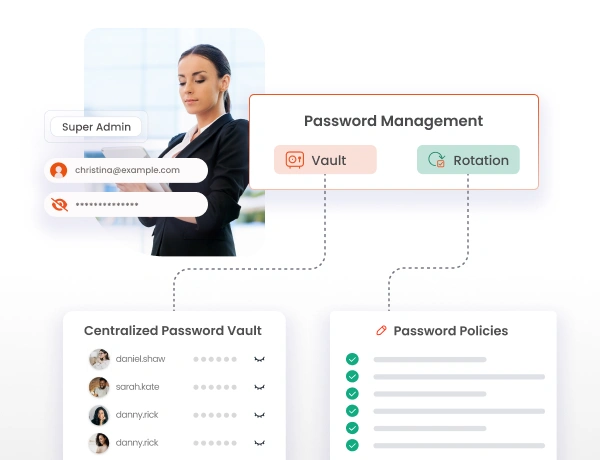
Secures sensitive financial credentials with Password Vault & Rotation capabilities, providing encrypted vaulting and automated password rotation for regulatory compliance and breach prevention.
Learn more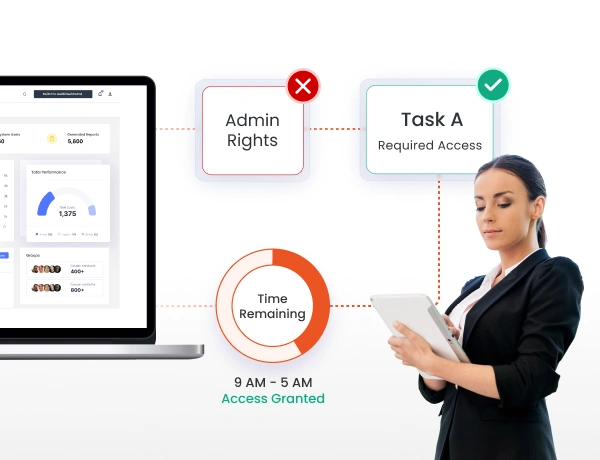
Provides temporary elevated privileges through Just-In-Time Access for urgent financial transactions, system maintenance, and emergency operations while maintaining comprehensive audit trails.
Learn more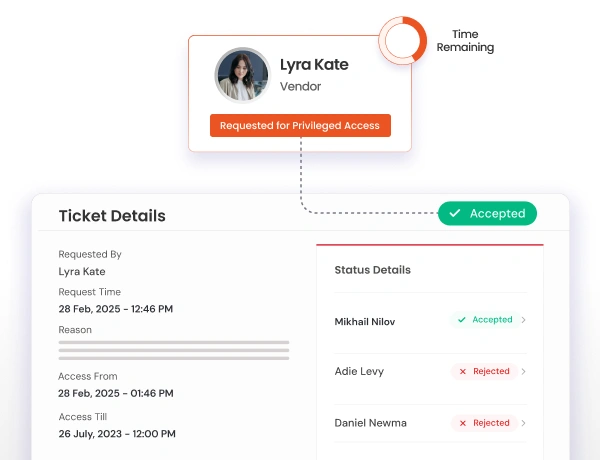
Protects work-from-home staff and third-party vendor connections using Vendor Privileged Access Management with secure gateways, multi-factor authentication, and controlled access.
Learn more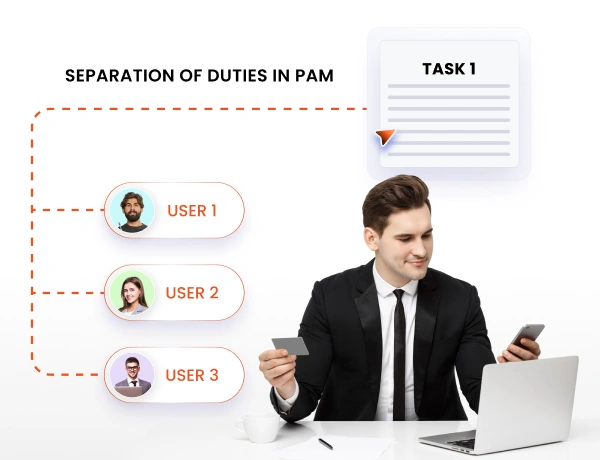
Enforces role separation between trading, compliance, and operations teams through Segregation of Duties controls to prevent conflicts of interest and ensure regulatory compliance.
Learn more
Records all privileged banking activities with Session Recording & Monitoring capabilities, providing audit-ready documentation for regulatory examinations and compliance reporting requirements.
Learn more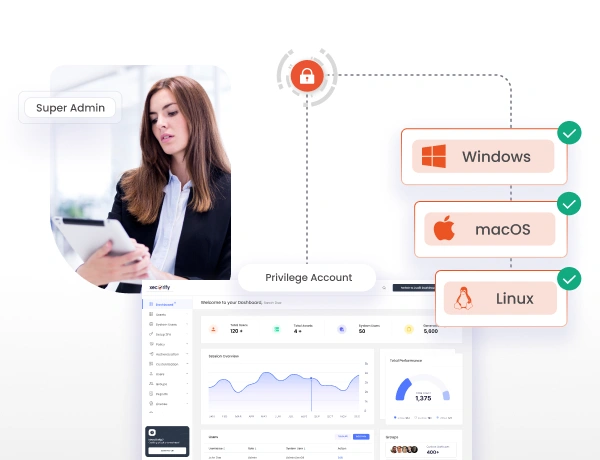
Secures financial workstations and trading terminals using Endpoint Privilege Management, preventing unauthorized access to sensitive banking applications and customer financial data.
Learn moreSecure privileged access to transaction processing systems, customer databases, and account management platforms with role-based controls and comprehensive audit trails.
Ensure SWIFT CSP adherence with dual authorization, session recording, and secure access to messaging infrastructure and payment processing networks.
Protect distributed ATM networks and branch systems with centralized credential management and secure remote access for maintenance technicians.
Safeguard PCI-compliant environments such as credit card processing, merchant services, and digital payment gateways, with just-in-time access controls.
Manage privileged access to PII, credit histories, and financial records with role-based permissions for compliance teams and customer service representatives.
Generate comprehensive compliance documentation for SOX, GDPR, and NCUA examinations with automated audit reports and real-time compliance dashboards.

PAM solution for banking prevents unauthorized access and detects potential fraud attempts before they impact critical banking or finance transactions.

Helps financial institutions meet regulatory requirements such as PCI-DSS, RBI and SOX by providing complete audit trails, session monitoring, and policy enforcement.

Remote workforce and vendor access create significant security risks for financial institutions, with PAM that provides secure, time-limited access.
Discover how miniOrange PAM can help your organization meet regulatory requirements and strengthen your security framework.
Learn More About PAM Compliance
miniOrange's agentless PAM eliminates complex endpoint installations and maintenance requirements, deploying immediately across existing banking infrastructure without service interruptions.
Industry-specialized configurations streamline integration with core banking systems and legacy protocols through advanced, customizable connectors.
Proven architecture scales seamlessly from community banks, Credit Unions, Global Banks, and multinational finance institutions, can all leverage miniOrange solutions for mission-critical security operations.
Competitive licensing models and flexible deployment options deliver comprehensive privileged access management capabilities without the premium costs of traditional enterprise security vendors.

Full data sovereignty and regulatory compliance with miniOrange PAM deployed entirely within banking infrastructure, ensuring sensitive credentials never leave organizational boundaries.

AWS and Azure marketplace deployment provides rapid scalability, automated updates, and reduced infrastructure overhead while maintaining enterprise-grade security for financial institutions.

Seamlessly connects traditional core banking systems with cloud applications through unified PAM architecture, enabling phased modernization without disrupting critical operations.
Start a free trial with us - the next step is all yours