

Phishing-resistant Multi-Factor Authentication (MFA) is an advanced authentication approach that uses public or private key cryptography to verify user identities without transmitting or exposing reusable credentials.
It is a passwordless MFA method, unlike traditional MFA, which relies on passwords, push notifications, or One-Time Passwords (OTPs). It cryptographically binds authentication to the specific web origin, making it immune to credential harvesting, adversary-in-the-middle (AiTM) proxy attacks, and social engineering.
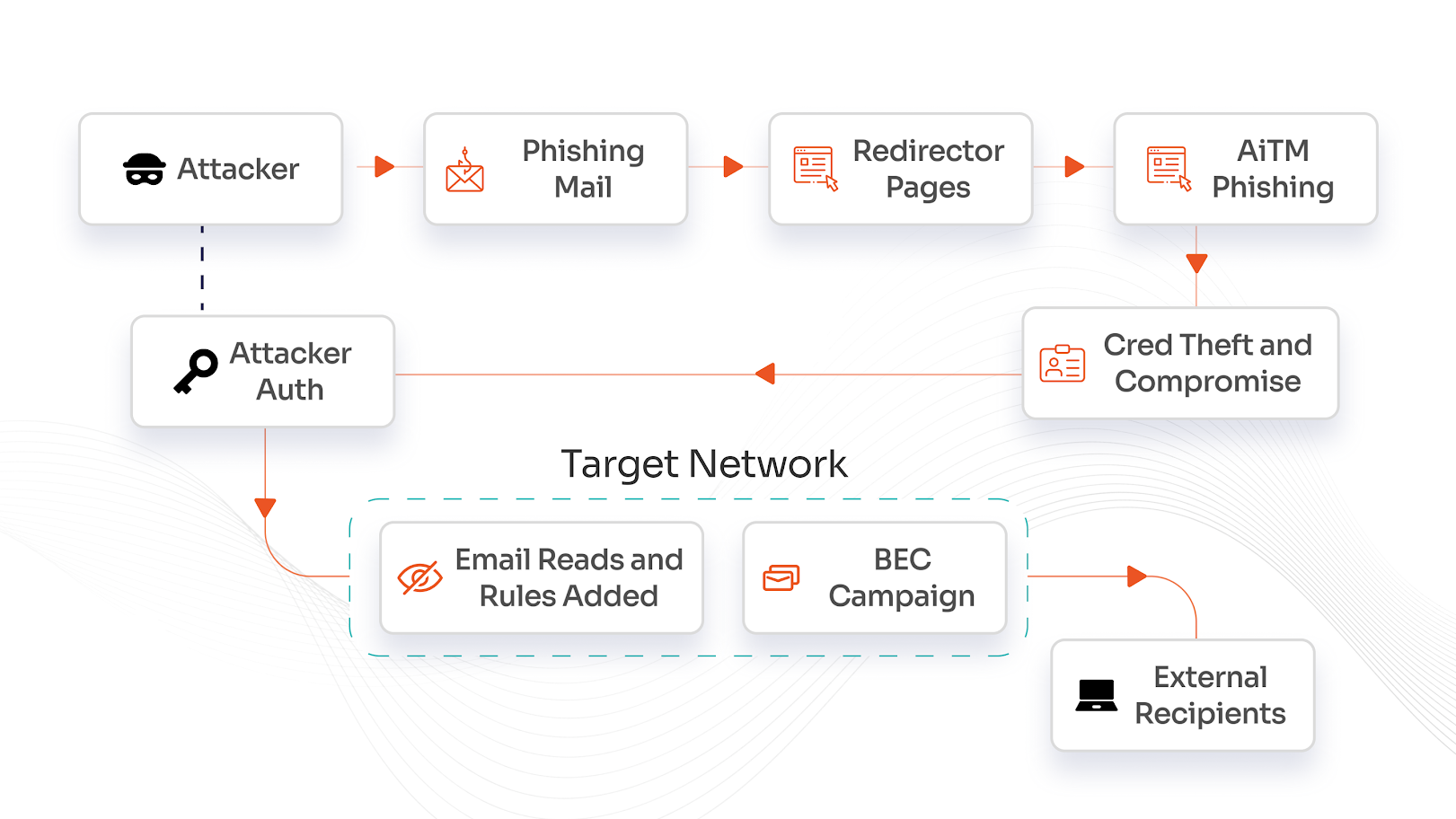
Phishing-resistant MFA is practical for businesses because:
- FIDO2 / WebAuthn Compliance: Relies on global open standards, pairing hardware security keys or platform biometrics (like Passkeys, Touch ID, or Windows Hello) with secure enclave hardware.
- No Shared Secrets: Eliminates passwords, SMS codes, and shared keys, leaving no reusable credentials for attackers to intercept or steal.
- Origin Binding: Automatically validates the application's domain URL, preventing users from authenticating on malicious phishing sites.
Deploying phishing-resistant MFA helps businesses mitigate risks and support Zero Trust compliance benchmarks established by NIST and CISA. It also reduces IT helpdesk costs associated with password resets and delivers a passwordless login experience.
The Problem with Traditional MFA
Why not just use traditional MFA (if you have it)? It's akin to locking your front door and leaving the key under the mat.
- User Friction: Extra steps (like code entry) slow people down and make them frustrated. The result is that frustrated users take shortcuts, and taking shortcuts compromises security.
- Phishing Vulnerability: Attackers can still fool SMS and email MFA through exploits like "push bombing." This results in human error being exploited by hackers, not weak technology.
- Shared Secrets are a Weakness: OTPs and passwords can be intercepted and reused in replay attacks. This results in the fact that if shared secrets can be copied, it is vulnerable to theft. And this is what attackers know very well.
Phishing-resistant MFA solves all of these by removing shared secrets altogether and providing organizations with a no-hassle, secure solution.
Benefits of Phishing-resistant MFA
Organizations using phishing-resistant MFA realize several benefits outside of what’s typically associated with preventing phishing attempts:
- Cost Savings: Phishing attacks are expensive. Not just due to the direct monetary loss that occurs from the breach, but also the downtime, reputational damage, and time spent to recover. A phishing-resistant MFA solution has the potential to reduce or eliminate these breach remediation costs for your organization.
- Easy Remote Access: Phishing-resistant MFA will allow access from anywhere safely and securely. This is especially beneficial for organizations that have a remote or hybrid workforce needing a scalable security solution, as per the business size.
- Regulatory Compliance: Many industries have strict data security requirements to comply with, and phishing-resistant MFA is the best way to meet the NIST 800-63-3, GDPR, and PCI DSS compliances, allowing access only by authenticated users to sensitive data.
- Polished User Experience: Because the focus of phishing-resistant MFA is designed to reduce extra steps that the customer takes, limiting the unproductive actions. This will improve productivity and satisfaction compared to normal MFA experiences and thereby raise the user adoption for the enterprise base.
In addition to reinforcing the security practices with phishing-resistant MFA, organizations can benefit from continued operational and financial savings. This is an investment in a security strategy that will ultimately deliver data protection, employee productivity, and customer care.
Types of Phishing-Resistant MFA
Stronger logins don’t have to mean clunky experiences. These MFA methods raise the bar for security while keeping things simple for users.
1. Biometric Authentication + Device Binding
Your face or fingerprint becomes the “key,” tied to your device. Even if hackers know your password, they can’t bypass your unique physical traits combined with a bound device. Secure, personal, and seamless biometric authentication along with device binding.
2. Push Notification Approval
Instead of typing codes, you get a quick approve/deny nudge on your trusted phone with a push notification. It’s instant, user-friendly, and far harder for attackers to hijack compared to SMS or email links.
3. Security Keys
A small hardware token you plug in or tap for verification, also known as token-based authentication. Backed by FIDO2 standards, it renders phishing useless because login only works with your physical key in hand. Simple, portable, and nearly bulletproof.
4. Passkeys
Passwords without the headaches. Passkeys use device-based cryptography, syncing to your trusted devices. There’s nothing to remember, nothing to type, and nothing for attackers to steal.
5. One-Time Passwords via Authenticator Apps
Still better than SMS codes, app-generated OTPs refresh every few seconds and stay offline. While not the strongest option in this list, they add a valuable extra layer of security.
Stronger MFA doesn’t just stop attackers; it frees users from password fatigue. The future of authentication Solution is clear: secure, smart, and stress-free.
Why is Phishing-Resistant MFA the Gold Standard?
Organizations are increasingly seeking resiliency against new and sophisticated phishing methods and are pursuing phishing-resistant MFA, which has gained traction among government agencies and top security standards organizations.
The U.S. Office of Management and Budget (OMB), in its Federal Zero Trust Strategy, identifies phishing-resistant MFA for its use because “credential theft remains one of the most common means adversaries use to gain access to sensitive information.” The U.S. government identifies it (OMB M-22-09) as the highest security standard for federal agencies to maximize accidental or intended phishing attempt reduction. It helps businesses comply with phishing-resistant MFA norms by the government.
The National Institute of Standards and Technology (NIST) advanced methods to achieve “verifier impersonation resistance,” the resistance to phishing.
- FIDO2/WebAuthn standardization makes phishing virtually impossible: companies like Microsoft and Google have observed decreases in account compromises by employees using security key hardware and realized the absence of breaches.
- Man-in-the-middle resistance: Authenticates both the user and the authentication source, helping prevent man-in-the-middle attacks and unauthorized access attempts.
- Cloning/replay attacks prevention: eliminates credentials from being replicated or replayed.
- Require hardware-based secure computing elements: must utilize TPM/Secure Enclave or secure storage.
- Enhanced user experience with cryptography: users should always have what is required for signing with security.
- Better regulatory compliance: possible formalized documents for your organization to make statutory as well as GDPR, PCI DSS, and HIPAA.
Phishing-resistant MFA is the highest security level for federal agencies (OMB M-22-09). It provides real man-in-the-middle resistance by authenticating both the user and the authentication smource, preventing cloning or replay attacks, requiring hardware-based solutions (e.g., TPM or secure enclave), enhancing user experience with biometrics, and naturally adjusting to help meet regulatory requirements (GDPR, PCI DSS, HIPAA).
miniOrange Phishing-Resistant Multi-factor Authentication
The MFA offering phishing resistance does not just provide extra steps like those in traditional MFA. miniOrange phishing-resistant MFA offers passwordless, FIDO2/WebAuthn-certified security that is one of the most secure against phishing while being frictionless for the user.
- FIDO2/WebAuthn compliant: Login passwordless with the use of public key cryptography with a FIDO2/WebAuthn certified device.
- Device-bound security: Your credentials are securely stored on your device, meaning nothing can be stolen.
- Biometrics: Authenticate using biometric authentication methods such as facial recognition and fingerprints, or hardware security keys, to provide secure access without any friction.
- Proven 99.9% effective: If you compare phishing-resistant MFA and traditional MFA side-by-side, you will notice that phishing-resistant MFA is 99.9% more effective and reduces compromised accounts.
- Compatible with your identity systems: The miniOrange phishing-resistant MFA integrates seamlessly into your existing ecosystem. This tells us that you don’t have to destroy and rebuild your infrastructure.
- Omnichannel monitoring: Get alerts and detailed logs in real time to help you take control of your monitoring efforts.
- Compliant with known standards: Designed to meet the needs of GDPR, NIST 800-63-3, and PSD2.
No codes to enter, no secrets to steal, and no weaknesses to exploit. Just rock-solid security with a user experience that grows with your organization, with miniOrange phishing-resistant MFA.
Getting Started with miniOrange Phishing-Resistant MFA
83% of workers globally prefer hybrid arrangements with a mix of remote and office.
As your organization grows and transitions into a global remote or hybrid workforce, adding extra security features to your system helps you keep attackers at bay. With miniOrange’s phishing-resistant MFA, this transition becomes smooth. Our state-of-the-art security features with perfect coding and airtight MFA protection provide more than necessary security for any size of your organization. That means scalability is just a click away with seamless identity and access control at your fingertips.
Are you ready to move on to passwordless and phishing-free? Start your free trial of miniOrange phishing-resistant adaptive MFA to easily and securely authenticate or book a consultation with our experts.
FAQs
What is the difference between MFA and phishing-resistant MFA?
Multi-factor authentication adds extra layers of login security with passwords and codes but can be phished. Phishing-resistant MFA works with FIDO2 security keys, hardware tokens, and biometrics that can’t be phished or faked by hackers, like replacing a standard lock with a secret handshake that hackers can’t imitate.
What makes MFA “phishing-resistant”?
Phishing-resistant MFA does not use removable secrets, such as passwords or codes, but utilizes hardware tokens or biometrics with cryptographic confirmation. Only trusted devices can verify authentication, preventing phishing attempts and spoofing altogether.
How is passwordless MFA different from phishing-resistant MFA?
Passwordless MFA provides authentication that does not use passwords but biometrics or hardware tokens for instant and seamless logins. Phishing-resistant MFA produces cryptographic keys associated with your device, which deter phishing, just like a secret handshake combined with a bouncer who knows how to spot a fake ID.
Can phishing bypass 2FA?
Yes. Hackers utilize fake web pages, man-in-the-middle attacks, SIM card swaps, and social engineering to capture passwords and codes while logging. 2FA is of assistance, but is not infallible; however, phishing-resistant MFA provides greater protection.
Why are passkeys considered phishing-resistant?
Passkeys store encrypted keys on your own device that never leave it. This allows the site to be verified prior to its usage. If a false site is called, it is inaccessible because it has no access to the keys, which means that hackers cannot copy your login.
Leave a Comment