

Identity Threat Detection and Response (ITDR) focuses on a part of the security environment that traditional security controls can overlook: what happens when an attacker uses a legitimate identity.
An attacker does not always need malware, an exposed port, or a software exploit to gain access. Stolen credentials, compromised accounts, excessive privileges, weak authentication, and abused service accounts can provide a legitimate path into business systems.
Instead of treating authentication as the end of the security process, ITDR continuously examines identity activity before, during, and after authentication. It looks at who is signing in, where they are signing in from, what they normally access, what privileges they have, and whether their behavior indicates compromise.
The result is an additional layer of identity security that helps organizations detect suspicious activity involving users, administrators, service accounts, applications, and other identities.
TL;DR
- ITDR stands for Identity Threat Detection and Response, a security approach focused on detecting and responding to threats targeting identities.
- It monitors authentication, privilege changes, access behavior, identity infrastructure, and other signals that can reveal account compromise.
- An ITDR solution complements IAM, PAM, IGA, EDR, SIEM, and XDR rather than replacing them.
- Modern ITDR also addresses machine and non-human identities, which can create significant visibility and privilege gaps.
- Behavioral analytics and automated response help security teams move from detecting suspicious identity activity to containing it.
Why Does Identity Threat Detection and Response Matter?
Identity has become a major part of the enterprise identity attack surface. Cloud applications, hybrid environments, SaaS platforms, remote access, privileged accounts, APIs, and machine identities have created more identities and authentication paths for attackers to target.
IBM describes ITDR as a proactive approach that monitors identity systems and activity for threats such as privilege escalation, account misconfigurations, brute-force attacks, credential stuffing, and unusual login behavior.
The challenge is that legitimate credentials can produce legitimate-looking events.
A compromised employee account may successfully authenticate. A stolen administrator credential may use an approved application. A service account may access a resource exactly as its permissions allow.
The suspicious part is often the context and behavior around that access.
For example:
- A user authenticates from an unusual location and immediately accesses sensitive systems.
- An account that normally has limited privileges suddenly receives administrative access.
- A dormant account becomes active after months of inactivity.
- A service account begins accessing resources outside its established pattern.
- Multiple accounts show coordinated authentication anomalies.
- An identity moves between systems in a way that suggests lateral movement.
These patterns are difficult to understand from a single authentication event. ITDR cybersecurity capabilities connect these signals to identify potential identity-based threats.
How Does ITDR Work?
An ITDR solution typically combines identity visibility, continuous monitoring, behavioral analytics, threat detection, investigation, and response.
Collect identity signals
The first step is gathering identity-related data from the systems that manage and enforce access.
Depending on the environment, this can include:
- Active Directory
- Microsoft Entra ID
- Identity providers
- SaaS applications
- Cloud platforms
- Authentication systems
- Privileged access systems
- Access requests
- Directory activity
- User and service-account activity
- Security tools such as SIEM, EDR, and XDR
IBM notes that ITDR can track logins, authentications, identity providers, access requests, and directory activity to identify deviations from expected behavior.
Establish behavioral baselines
Not every unusual event represents an attack. An administrator may legitimately access more systems than an ordinary employee. A service account may authenticate at unusual hours because it supports an automated process.
Behavioral analytics can establish patterns around authentication locations, devices, access times, resources, privileges, and normal identity activity. Significant deviations can then be investigated as potential threats.
Detect suspicious identity activity
The next stage is identity threat detection. Detection can cover known techniques and behavioral anomalies, including:
- Credential stuffing
- Password spraying
- Brute-force attempts
- Credential theft
- Account takeover
- Privilege escalation
- Kerberoasting
- Impossible travel
- MFA abuse
- Dormant account activity
- Suspicious administrative behavior
- Lateral movement
- Abnormal service-account activity
Correlate identity and security events
Suppose a user signs in from an unfamiliar location. On its own, this may simply be an anomaly. If that event is followed by a privilege change, access to an unfamiliar application, and activity on a sensitive server, the risk picture changes.
This correlation is an important part of ITDR cybersecurity because it connects identity activity with the broader attack path.
Respond to the threat
Detection is only one part of the process. Depending on the risk and integrations available, an ITDR solution can trigger actions such as:
- Requiring additional authentication
- Revoking sessions
- Disabling an account
- Resetting credentials
- Removing elevated privileges
- Restricting access
- Marking an identity as compromised
- Sending an incident to the SOC
- Triggering SIEM, XDR, or SOAR workflows
IBM describes response actions including disabling compromised accounts, isolating affected systems, and requesting additional authentication.
What Threats Does ITDR Detect?
The specific detections vary by platform, but modern Identity Threat Detection and Response capabilities generally focus on attacks that abuse credentials, privileges, accounts, and identity infrastructure.
Credential theft and credential misuse
Stolen credentials allow attackers to operate under an existing identity. The problem is not necessarily that authentication fails. The attacker may authenticate successfully because the credentials are valid.
This makes credential misuse particularly difficult to detect using authentication controls alone. Behavioral analysis can identify activity that does not fit the identity's normal pattern.
Password spraying and credential stuffing
Attackers can distribute authentication attempts across many accounts to avoid triggering account-specific thresholds. By correlating authentication events across identities, ITDR can identify patterns that may indicate coordinated credential attacks.
Privilege escalation
An attacker who compromises an ordinary account may attempt to gain administrative access. Monitoring privilege assignments, entitlement changes, and administrative behavior can reveal suspicious escalation before the attacker can use expanded access extensively.
Lateral movement
Once an identity is compromised, attackers may use its permissions to move between systems. Identity-aware detection can connect authentication activity across systems and identify unusual access paths or movement patterns.
Dormant and orphaned accounts
Inactive accounts can become attractive targets because their activity may not receive the same attention as active user accounts. Monitoring dormant and orphaned identities helps expose unexpected reactivation and access.
Non-human identity abuse
Modern environments contain far more than employee accounts. Applications, service accounts, APIs, workloads, service principals, and machine identities can authenticate and access resources without a person being present.
Wiz identifies machine identities as a significant blind spot because service accounts, API keys, and container roles can be over-permissioned and insufficiently monitored. That makes non-human identities an increasingly important part of the identity attack surface.
What Are the Core Components of an ITDR Solution?
A mature ITDR solution brings several capabilities together rather than relying on one detection method.
Identity discovery and visibility
Security teams need visibility into users, accounts, privileges, entitlements, authentication systems, and access relationships. Without that visibility, it is difficult to determine whether an identity has excessive access or whether an unusual event represents meaningful risk.
Identity lifecycle monitoring
Changes to identities can create security signals. Account creation, privilege changes, authentication-method changes, account deactivation, reactivation, and entitlement modifications can all provide useful context for identity threat detection.
Behavioral analytics
Behavioral analytics helps establish what normal activity looks like for different identity types. This is especially important when detecting compromised accounts that continue to use valid credentials.
Privileged identity monitoring
Privileged accounts can provide access to critical systems and sensitive data. Monitoring administrative authentication, privilege elevation, privileged sessions, and changes to administrative access adds an important layer of identity security.
Identity attack surface analysis
The identity attack surface includes the identities, credentials, privileges, authentication paths, identity providers, directories, service accounts, and relationships that can be targeted or abused.
BeyondTrust, for example, describes ITDR as continuous visibility into identities, accounts, privileges, and entitlements across on-premises, cloud, and SaaS environments.
Automated response
An effective response capability reduces the time between identifying suspicious behavior and containing it. Automated actions can be particularly useful for high-confidence events where waiting for manual intervention could allow an attacker to continue operating.
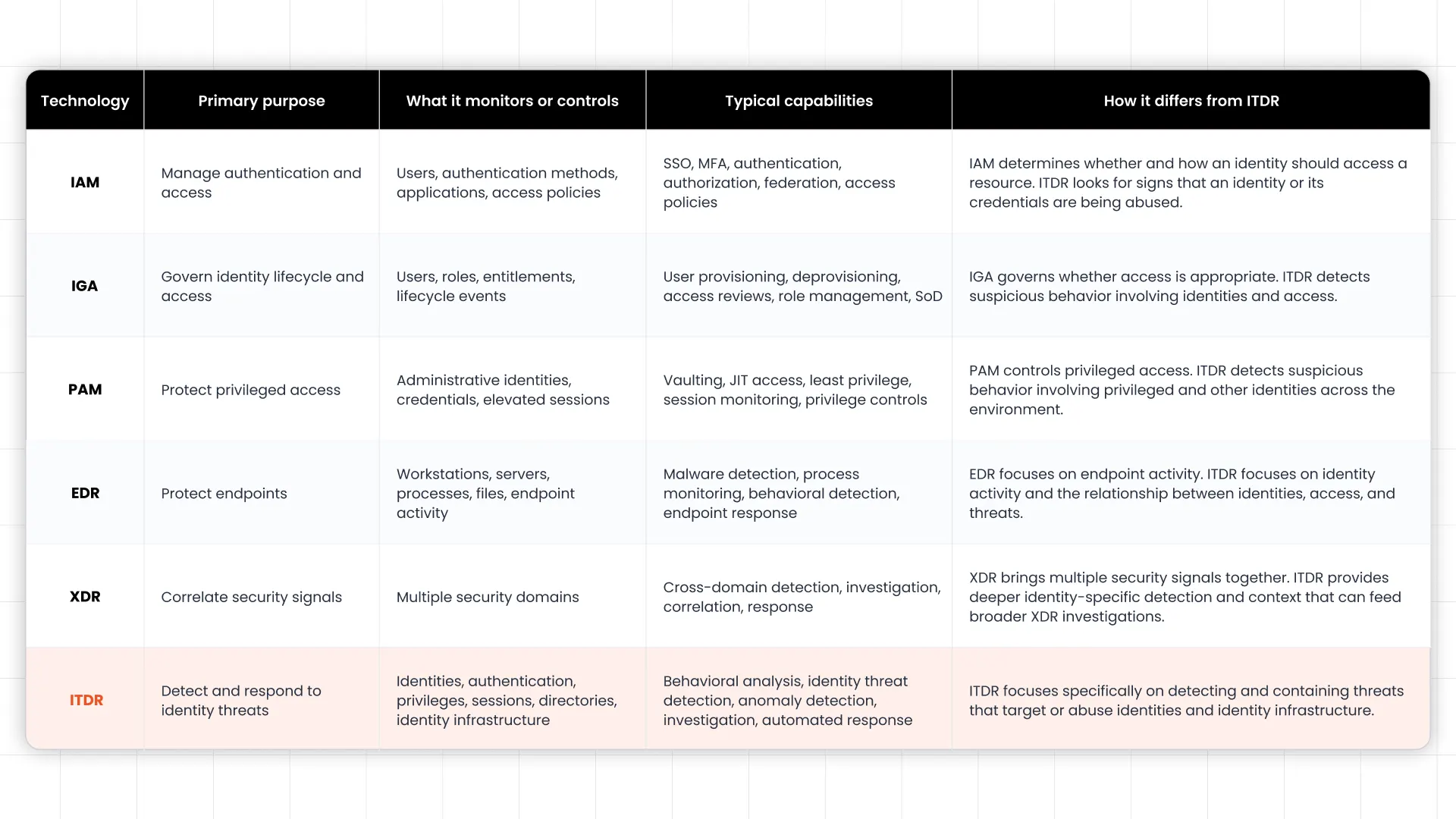
ITDR vs IAM vs PAM vs IGA vs EDR vs XDR
These technologies address different security requirements. ITDR adds identity-focused detection and response to controls that primarily manage access, privileges, endpoints, or broader security telemetry.
How to Build an ITDR Strategy
Deploying Identity Threat Detection and Response is not simply a matter of adding another security product. The quality of detection depends on the identity data, context, integrations, and response processes surrounding it.
Map the identity attack surface
Start by identifying:
- Human identities
- Privileged identities
- Service accounts
- Machine identities
- Application identities
- Cloud identities
- Identity providers
- Directories
- Critical authentication paths
- High-value applications and resources
This creates a baseline for understanding where identity compromise could have the greatest impact.
Prioritize high-risk identities
Not every identity carries the same level of risk. Prioritize accounts with administrative privileges, broad entitlements, access to sensitive resources, or the ability to create or modify other identities.
Establish behavioral baselines
Determine normal authentication and access patterns for different identity types. A domain administrator, employee, application account, and service account should not necessarily have the same baseline.
Integrate identity and security controls
Connect ITDR cybersecurity capabilities with IAM, PAM, IGA, SIEM, EDR, XDR, cloud security, and other relevant systems. This allows identity events to be investigated alongside endpoint, cloud, and application activity.
Monitor non-human identities
Include service accounts, API credentials, applications, workloads, and machine identities in monitoring where they have meaningful access. This is increasingly important as organizations add more automated processes and machine-to-machine access.
Define response actions
Determine which detections require investigation and which can trigger immediate containment. For example, a low-confidence anomaly may generate an alert, while confirmed credential compromise could trigger session revocation or account restriction.
Measure detection and response
Useful measures include:
- Time to detect identity compromise
- Time to contain compromised accounts
- High-risk identity events detected
- Privilege anomalies identified
- Dormant accounts discovered
- Suspicious authentication events investigated
- Automated response actions completed
What Are the Benefits of ITDR?
A well-designed ITDR solution can strengthen security operations by giving teams greater visibility into how identities behave across the environment.
Detect threats that use valid credentials
Traditional controls may not flag an attacker simply because the credentials are valid. Identity-focused behavioral analysis adds context around how those credentials are being used.
Reduce investigation time
Security teams can investigate identity events alongside privileges, access relationships, sessions, and related endpoint or cloud activity.
Reduce attacker dwell time
Automated response can shorten the gap between detecting suspicious behavior and restricting the identity involved.
Improve identity security posture
Detection data can reveal excessive privileges, risky configurations, dormant accounts, weak authentication practices, and unexpected access paths.
Extend visibility to non-human identities
Monitoring service accounts, applications, and machine identities helps close gaps outside traditional user-account monitoring.
Who Needs ITDR?
Security Operations teams can use ITDR to investigate account compromise, credential misuse, privilege escalation, and lateral movement.
Identity teams can use identity threat detection to identify unusual authentication activity and risky identity changes.
PAM teams can monitor privileged identities and connect privileged activity with broader identity threats.
Security architects can integrate identity signals into a larger detection and response architecture.
Risk and compliance teams can gain additional visibility into identity activity, access controls, and security monitoring.
Identity Threat and Detection Response with miniOrange
miniOrange provides identity and access capabilities that can support an organization's broader identity security and ITDR strategy.
Relevant capabilities include:
- Adaptive and risk-based authentication
- Multi-factor authentication
- Identity governance
- Access reviews
- Privileged access management
- Just-in-time privilege elevation
- Session monitoring
- Identity and access activity monitoring
- Identity lifecycle controls
- Cloud, hybrid, and on-premises deployment options
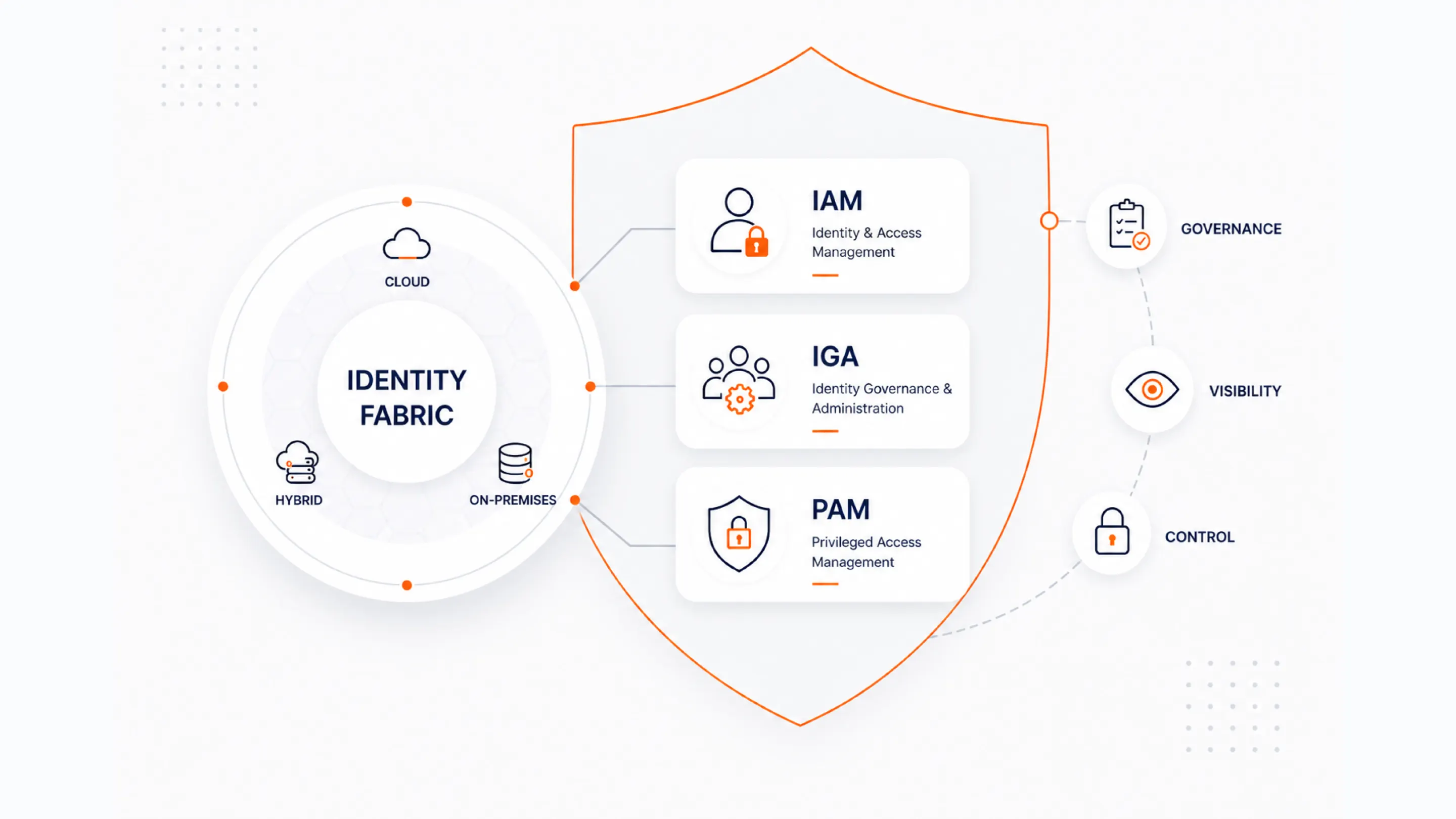
These capabilities address different parts of the identity security lifecycle. Authentication controls establish how users access resources, governance controls manage access rights, PAM protects privileged activity, and monitoring capabilities provide identity signals that can support detection and response.
The objective is to connect prevention, access control, visibility, and response so suspicious identity activity can be investigated and contained.
Making Identity Threat Detection and Response Part of Security Operations
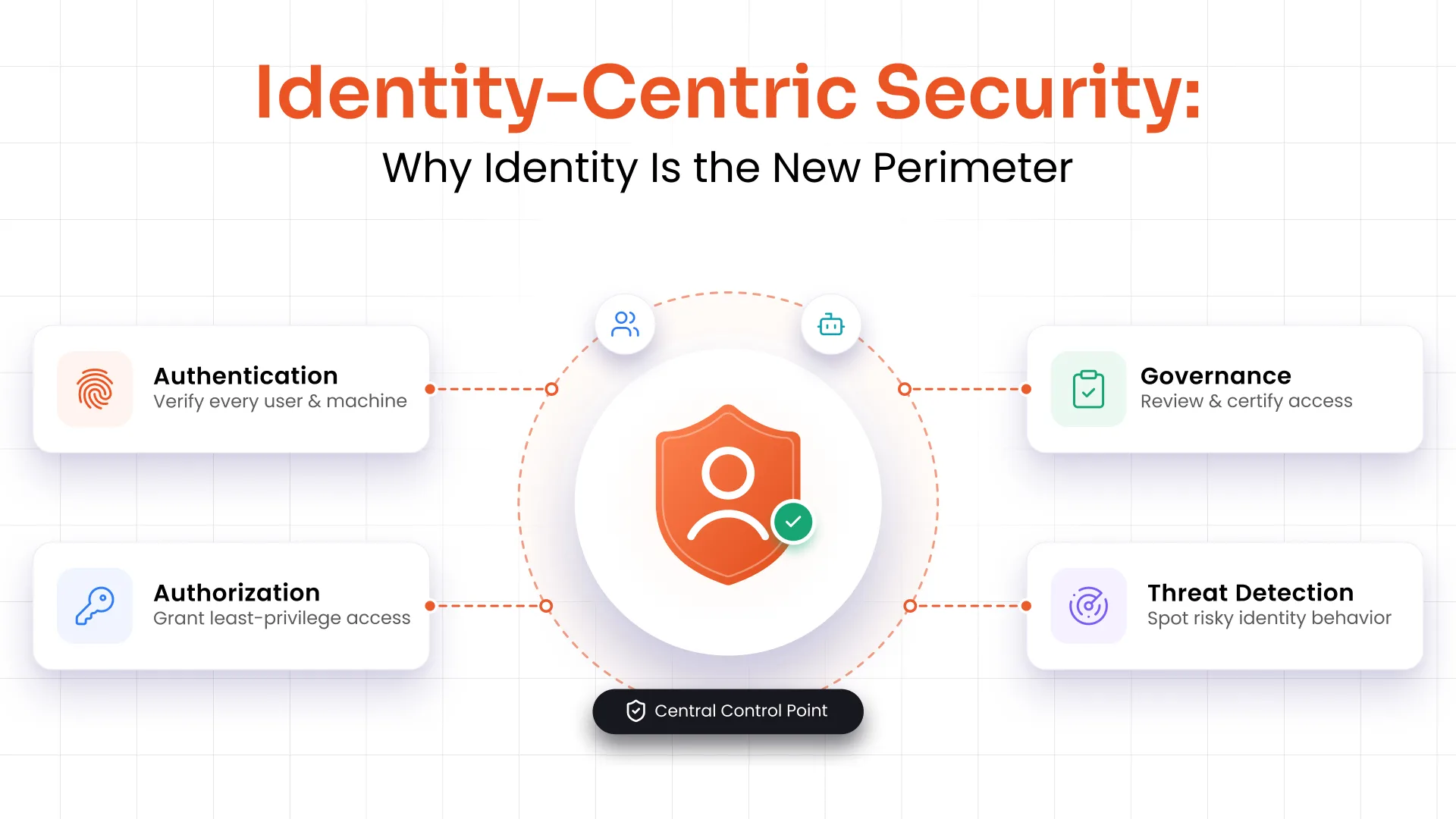
Identity security cannot end when a user successfully authenticates.
A legitimate identity can be compromised. A valid credential can be stolen. A privileged account can be misused. A service account can be exploited without any human interaction.
That is why Identity Threat Detection and Response adds a different layer to the security model.
An effective ITDR solution continuously examines identity behavior, access patterns, privilege changes, authentication activity, and identity infrastructure. It provides the context needed to determine whether an otherwise legitimate action may be part of an attack.
As organizations expand across cloud, SaaS, hybrid infrastructure, and machine identities, the identity attack surface becomes harder to understand through access controls alone.
The role of ITDR cybersecurity is to connect that identity context with detection, investigation, and response, helping security teams identify identity-based attacks and act before compromised identities can cause greater damage.
FAQs
What does ITDR stand for?
ITDR stands for Identity Threat Detection and Response. It focuses on detecting, investigating, and responding to threats targeting identities, credentials, privileges, authentication systems, and identity infrastructure.
Is ITDR the same as identity security?
No. Identity security is the broader practice of protecting identities, credentials, privileges, and access. Identity Threat Detection and Response focuses specifically on identifying and responding to threats involving those identities.
Can ITDR detect credential misuse?
Yes. Credential misuse can be detected through unusual authentication behavior, unexpected access patterns, privilege changes, unfamiliar locations, and other signals. Detection capabilities vary by platform and available integrations.
Does ITDR replace IAM or PAM?
No. IAM manages authentication and access, while PAM protects privileged access. An ITDR solution adds detection and response capabilities focused on suspicious identity activity and works alongside these technologies.
Can ITDR monitor non-human identities?
Yes, depending on the platform. Modern identity threat detection and response approaches increasingly include service accounts, applications, API credentials, workloads, and machine identities because these identities can carry significant privileges.
How does ITDR work with EDR and XDR?
EDR primarily monitors endpoints, while ITDR cybersecurity focuses on identity activity. XDR can correlate identity, endpoint, cloud, network, and other security signals. Combining these capabilities provides broader context for investigating identity-based attacks. IBM and CrowdStrike both describe identity and endpoint telemetry as complementary parts of broader detection and response workflows.
Leave a Comment