

Data Security Posture Management (DSPM) is a cybersecurity technology that discovers, classifies, and continuously monitors sensitive data across cloud platforms, SaaS applications, and hybrid infrastructure, giving security teams visibility into where that data lives, who can access it, and how exposed it is to risk.
As organizations expand across cloud platforms, SaaS applications, and hybrid infrastructures, their data has become fragmented, scattered, and increasingly difficult to track. Traditional perimeter-based security tools were never designed for this reality.
DSPM shifts the focus from securing infrastructure to securing data itself. It gives security teams the context and control they need to protect sensitive information wherever it lives, across any environment.
DSPM Explained: Why it Matters Now
The term DSPM was formally introduced by Gartner in 2022, and adoption has grown rapidly since then.
DSPM answers four fundamental questions that every security team should be asking:
- Where is our sensitive data stored, and is that list accurate?
- Who has access to it, and is that access appropriate?
- How is data moving across our systems and to third parties?
- Are there active risks or policy violations we are not aware of?
Without answers to these questions, even the most sophisticated security stack has gaps.
Why DSPM Matters for Your Organization
The reason is straightforward: cloud adoption has made it nearly impossible for security teams to manually track sensitive data. Files get copied, databases get replicated, and SaaS tools pull in customer information without anyone noticing.
DSPM automates the discovery and protection process at a scale that humans simply cannot match.
There's also another side, the one that aligns with the growing adoption of AI and machine Learning (ML) tools. DSPM uses ML and AI models that understand context, not just patterns.
These AI tools can identify sensitive content in unstructured files like PDFs, Slack messages, and meeting transcripts with far greater accuracy than rule-based systems ever could. This distinction matters because the majority of enterprise data is unstructured, and that is precisely where the most risk tends to hide.
Furthermore, DSPM is increasingly being extended to govern what data feeds into AI pipelines, ensuring that LLMs and AI assistants do not inadvertently expose PII, financial data, or intellectual property.
Why DSPM is Becoming Non-Negotiable for Security Teams?
DSPM deserves a dedicated place in the security stack; the reason lies in how the data environment has changed over the last few years. We will walk through the reasons why security teams must invest in a DSPM solution.
1. Complex Environments
Enterprises use cloud services, SaaS applications, and often operate across multiple cloud providers simultaneously. Each of these environments handles sensitive data differently. Without a centralized view, it is impossible to handle the security posture of these apps and services. DSPM offers a unified layer, so security teams have a single, consistent view of where the data lives and how it is protected.
2. Increasing Volume of Data
Organizations are generating more data than ever before, and much of it is unstructured. Emails, PDFs, log files, images, spreadsheets, and collaboration documents all potentially contain sensitive information.
This volume makes manual data management impossible. DSPM automates discovery and classification at scale, ensuring that even data generated yesterday is visible and assessed by today.
3. Evolving Threat Landscape
Modern attackers are not brute-forcing firewalls. They are compromising credentials, moving laterally through systems, and hunting for specific high-value data like customer PII, financial records, or intellectual property. Insider threats, whether malicious or accidental, follow similar patterns.
DSPM helps security teams get ahead of this by identifying sensitive data that is overexposed, assessing unusual access patterns, and flagging potential exfiltration activity before a breach becomes a headline.
4. Compliance Assurance
Regulatory requirements around data privacy have expanded significantly. GDPR, HIPAA, CCPA, PCI DSS, and a growing list of regional regulations all require organizations to know exactly where sensitive data resides, how it is protected, and who can access it. Failing to demonstrate this can result in audits, fines, and legal exposure.
DSPM makes compliance manageable by continuously tracking sensitive data, enforcing policies, and generating audit-ready reports.
5. Data Governance and Risk Management
Good security cannot exist without good governance. Data governance requires clear answers about who owns data, how it is being used, and whether its protection aligns with business and legal requirements. Without visibility into the data itself, governance remains theoretical.
DSPM bridges the gap between security and governance by providing concrete data-level insights that inform ownership decisions, policy enforcement, and risk management strategies.
How Does DSPM Work Behind the Scenes to Protect Your Data?
DSPM is not a single feature but a continuous, multi-stage process that operates across the entire data lifecycle. Here is how it works in practice.
1. Data Discovery
Before you can protect data, you need to know where it exists. DSPM tools use data discovery to scan across all connected environments, including cloud storage, relational databases, data warehouses, SaaS platforms, object storage, and endpoints, to build a comprehensive inventory of data assets.
Critically, this discovery is not a one-time audit. Leading DSPM platforms perform continuous, real-time discovery, meaning that the moment a new database is spun up, a file is copied to a new location, or a SaaS tool starts pulling in customer records, the DSPM platform detects it and updates the inventory automatically.
This process matters because point-in-time scans create a false sense of security. In a dynamic cloud environment, your data footprint can change significantly within hours.
2. Data Classification
Once data is discovered, it needs to be categorized. DSPM classifies data based on its sensitivity and type. Common categories include Personally Identifiable Information (PII), Protected Health Information (PHI), Payment Card Data (PCI), intellectual property, and confidential business data.
Modern DSPM platforms go well beyond simple pattern matching. They use AI and ML-based classification engines that understand context, enabling them to accurately identify sensitive content in unstructured formats like PDFs, spreadsheets, emails, and even code repositories.
Data Classification also informs data lineage tracking, which maps how a specific piece of data was created, where it has traveled, and how it has changed over time. This lineage visibility is essential for accurate risk assessment and for responding to data subject access requests under regulations like GDPR.
3. Data Flow Mapping
Data does not stay in one place. It moves between applications, gets copied into analytics pipelines, and is often shared with third-party vendors. DSPM maps these data flows to show exactly how sensitive information travels across your environment.
This mapping reveals risky pathways, such as sensitive data being pulled into a poorly secured analytics tool, or customer records being exported to an external service without authorization.
Furthermore, data lineage tracking extends capability by recording the full history of how data has moved and transformed. This is particularly valuable during incident investigations, where understanding the exact path sensitive data traveled can be the difference between a contained breach and a prolonged one.
4. Risk Assessment and Prioritization
After discovering and classifying data, DSPM evaluates the risk associated with each data asset. Risk factors include how exposed the data is (publicly accessible vs. internal), who has access to it, whether encryption is in place, and whether there are active compliance violations.
Critically, DSPM prioritizes these risks so security teams can focus on what matters most. Not every misconfiguration is equally dangerous, but an exposed database containing PII with overly permissive access is a fire that needs to be put out immediately.
5. Security Control Implementation
DSPM works with your existing security tools to enforce controls based on risk assessment findings. This could mean automatically encrypting unprotected files, triggering access reviews, enforcing data masking, or flagging specific data stores for immediate remediation.
This step transforms visibility into action, ensuring that identified risks do not just sit in a dashboard but are actively addressed.
6. Monitoring, Auditing, and Threat Detection
DSPM operates continuously, monitoring how data is accessed and used in real time. It tracks user behavior, flags anomalies such as bulk downloads or access at unusual hours, and maintains detailed audit logs.
These logs are invaluable for both threat detection and compliance. If an incident occurs, security teams have a complete record of who accessed what data, when, and from where.
7. Remediation and Prevention
When risks are identified, DSPM guides or automates remediation. This could involve revoking access, correcting misconfigurations, re-encrypting data, or updating policies. Over time, DSPM also helps prevent issues from recurring by feeding findings back into policy enforcement and security workflows.
Top Benefits of DSPM: From Visibility to Real Risk Reduction
The top benefits of data security posture management include:
1. Full Data Visibility
DSPM gives organizations a complete, up-to-date picture of all sensitive data across every environment. This visibility eliminates blind spots and provides the foundation for every other security and governance activity.
2. Better Access Control
By mapping who has access to sensitive data, DSPM helps organizations identify and remediate excessive permissions. This directly reduces the risk of insider threats and limits the blast radius of compromised credentials.
3. Ongoing Risk Assessment
Security environments are not static. New data is created, access permissions change, and new vulnerabilities emerge constantly. DSPM provides continuous risk assessment rather than point-in-time snapshots, ensuring that the security posture reflects current reality.
4. Faster Threat Response
With real-time monitoring and contextual alerts, security teams can respond to potential threats significantly faster. Knowing that accessed data was sensitive PII, rather than just a name database, eventually improves triage and response quality.
5. Stronger Security Policies
DSPM provides the data-level insights needed to write and enforce meaningful security policies. Instead of generic rules, organizations can create policies that reflect the actual risk profile of their specific data environment.
DSPM vs. CSPM: What's the Difference and Why You Need Both
A common point of confusion is the relationship between DSPM and Cloud Security Posture Management (CSPM). Both are important, but they operate at different layers.
| Element | DSPM | CSPM |
|---|---|---|
| Primary Focus | Protect sensitive data | Cloud infrastructure security |
| Visibility Level | Data-level for all environments | Configuration and infrastructure level |
| Core Risk Detection | Policy violations, access risks, and data exposure | Compliance gaps and misconfigurations |
| Use Cases | Compliance, governance, data privacy | Infrastructure compliance and cloud security posture |
| Example of a Risk | Customer PII exposed in a public database | S3 bucket with public read access enabled |
| Compliances | HIPAA, GDPR, CCPA, PCI DSS, etc. | CIS Benchmarks, cloud-native compliance, SOC 2, etc. |
The simplest way to think about it: CSPM secures the house, DSPM protects the valuables inside it. CSPM would tell you that a door is unlocked. DSPM tells you that the unlocked room contains a safe full of customer data. Both tools are complementary and should operate together in a mature security program. Using only one leaves significant gaps.
Key DSPM Integrations That Strengthen Your Security Stack
DSPM is most powerful when it is connected to the rest of your security ecosystem. Here are the key integrations that amplify its value.
1. Identity and Access Management (IAM)
IAM controls who can access systems and resources. Integrating DSPM with IAM allows organizations to tie data sensitivity directly to access decisions, ensuring that only the right identities reach high-risk data.
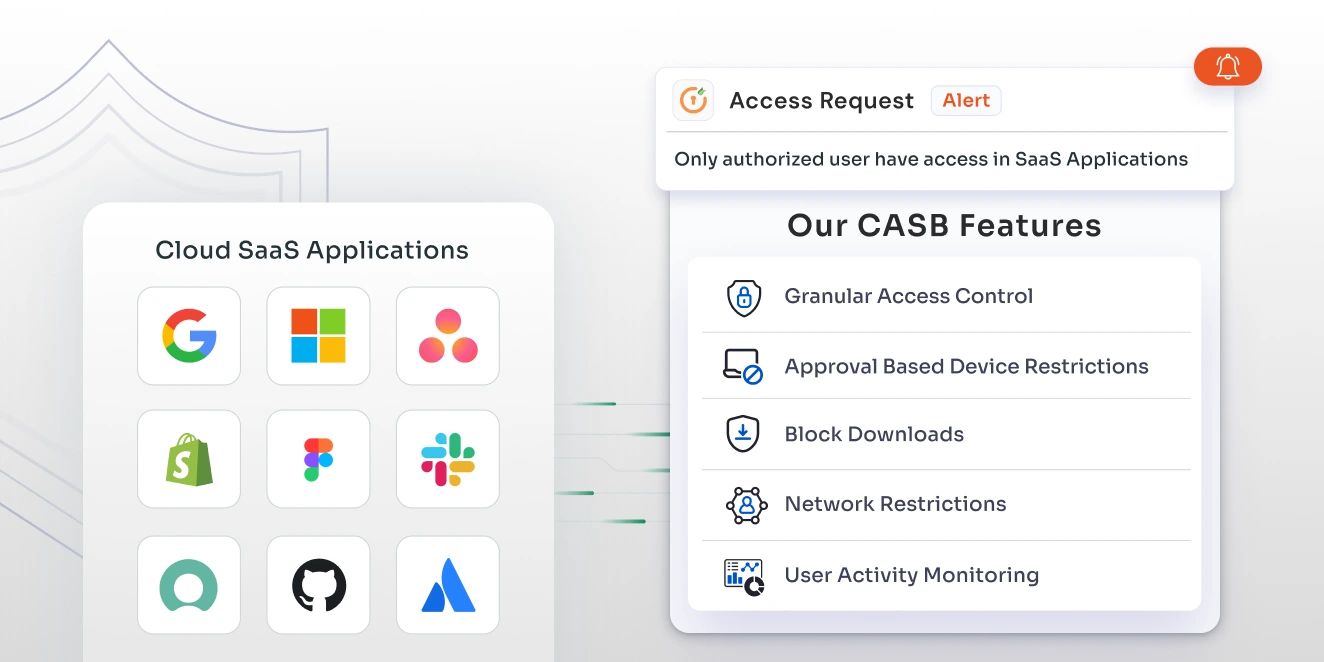
2. Cloud Access Security Broker (CASB)
CASBs monitor and control data movement in SaaS applications. Pairing CASB with DSPM ensures that sensitive data identified within cloud apps is protected and that policy violations are caught in real time.
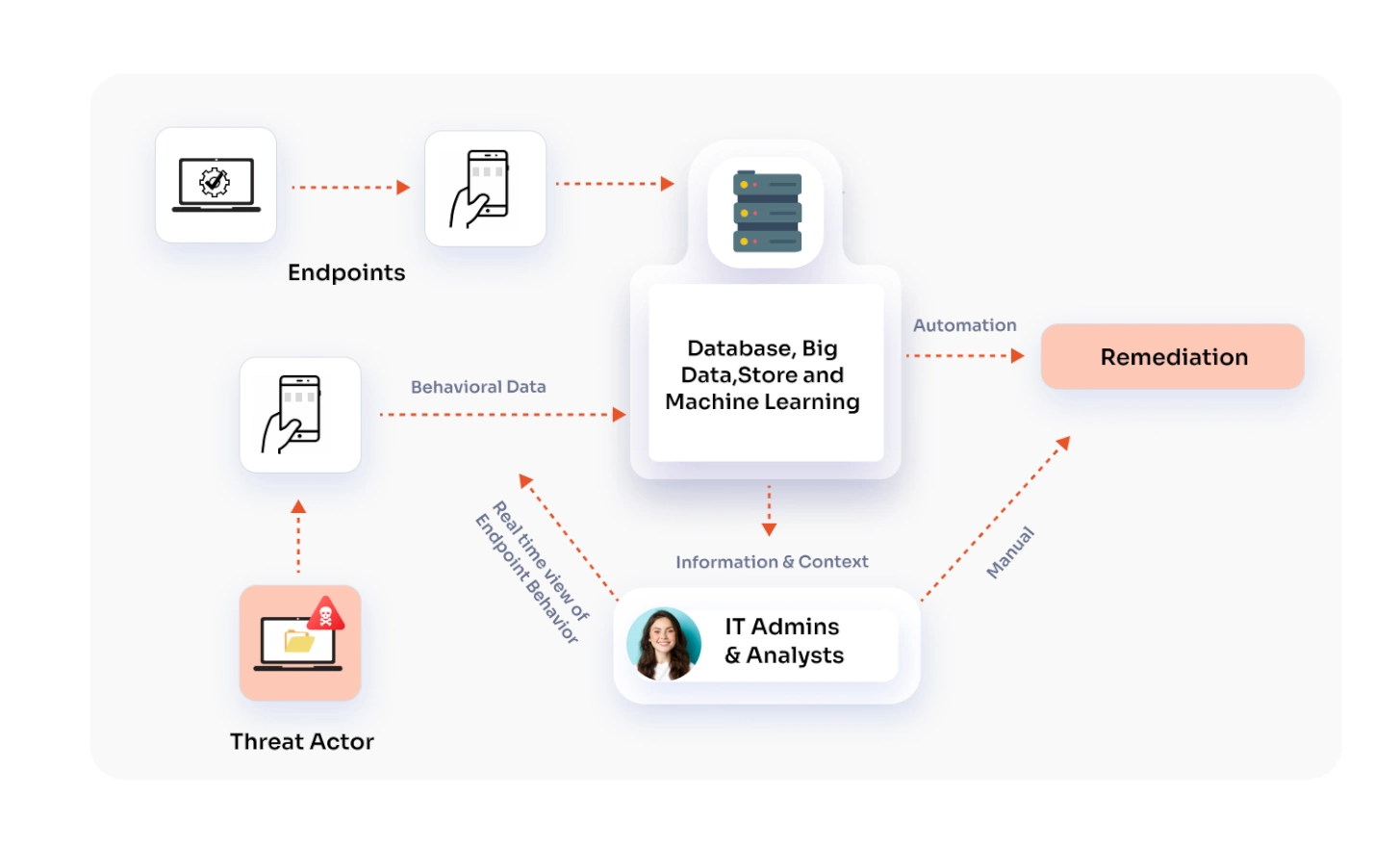
3. Endpoint Detection and Response (EDR)
EDR tools protect devices from malicious activity. DSPM adds context to EDR alerts by identifying whether the data accessed or exfiltrated from an endpoint was sensitive, helping security teams prioritize their response.
4. Security Information and Event Management (SIEM)
SIEM platforms aggregate logs and security events across the environment. DSPM enriches SIEM data with information about what sensitive data was involved in each event, transforming raw alerts into actionable intelligence.
5. Data Loss Protection (DLP)
DLP detects and prevents the unauthorized transfer, loss, and leakage of sensitive data. It safeguards information, such as PII, intellectual property, etc., by monitoring it in motion, use, and at rest across varied endpoints, cloud, and networks.
6. Intrusion Detection and Prevention Systems (IDPS)
IDPS monitors network activity for malicious behavior. DSPM integration adds data context to network events, helping teams understand whether detected intrusion attempts are targeting sensitive data stores.
7. Security Analytics and AI Tools
AI-powered security analytics can process the large volumes of data that DSPM generates and surface patterns that human analysts might miss. This integration improves anomaly detection, risk scoring, and automated response capabilities.
DSPM Use Cases Every Security Leader Should Know
1. Mergers and Acquisitions
M&A activity creates immediate data security risk. When one company acquires another, they inherit that company's data environment, including all its misconfigurations, excessive permissions, and hidden sensitive data.
DSPM allows security teams to quickly assess the acquired organization's data posture and identify critical risks before they become the acquirer's liability.
2. Examining and Addressing Attack Surfaces
Every piece of exposed sensitive data is a potential entry point for attackers. DSPM systematically identifies and prioritizes exposed data across all environments, enabling security teams to reduce the attack surface methodically rather than reactively.
3. Cloud Migration
Cloud migrations are among the highest-risk data security events. Data gets moved, copied, and restructured, and in the process, sensitive information can end up in unexpected places without appropriate controls.
DSPM provides continuous visibility throughout the migration, ensuring sensitive data lands in the right place with the right protections from day one.
4. Data Security in Multi-Cloud Environments
Organizations using multiple cloud providers face the challenge of maintaining consistent security policies across platforms with very different architectures and native tools.
DSPM provides a unified view and consistent policy enforcement layer across AWS, Azure, GCP, and other environments.
5. Data Governance
Effective data governance requires knowing where data lives, who is responsible for it, how it is being used, and whether it is protected appropriately.
DSPM provides the data-level visibility that governance programs need to function, turning governance from a policy exercise into an operational reality.
DSPM Implementation Best Practices for Scalable Data Security
1. Start with Complete Data Discovery
Implementation should always begin with a thorough discovery phase. Any sensitive data that is not discovered cannot be protected. Cast a wide net initially and ensure all environments, including legacy systems and shadow IT, are included in the scan.
2. Classify Your Data Based on Sensitivity
Invest time in building a clear, practical classification taxonomy. Focus on a tiered approach: critical, sensitive, internal, and public. Make sure that classification rules reflect your specific regulatory requirements.
3. Continuously Monitor for Risky Behavior
Set up real-time monitoring with well-tuned alerting thresholds. Too many alerts cause fatigue; too few miss real threats. Use behavioral baselines to identify genuine anomalies rather than just volume thresholds.
4. Align DSPM with Regulatory Compliance
Map your DSPM configuration to the specific requirements of relevant regulations. For GDPR, this means tracking all PII with clear data subject mapping. For HIPAA, it means ensuring PHI is encrypted and access-logged. Build compliance reports into your regular DSPM workflows.
5. Integrate DSPM with Existing Security Stack
A DSPM tool that operates in isolation provides limited value. Prioritize integrations with your IAM, SIEM, and DLP tools early in the deployment process. These integrations multiply the value of every other tool in your stack.
6. Review and Refine Regularly
Your data environment changes constantly. New applications get onboarded, data stores get created, and user roles evolve. Review DSPM policies and classification rules at least quarterly, and after any significant infrastructure change.
7. Extend DSPM Coverage to AI Workflows
If your organization uses generative AI tools or is building internal AI applications, extend your DSPM policies to cover AI data pipelines. Define what categories of data are permitted to enter AI systems, implement controls that prevent sensitive data from being used as training input without approval, and monitor AI outputs for inadvertent data exposure.
This is an emerging but rapidly critical area of data security posture management that is already on regulators' radar in several jurisdictions.
AI and GenAI Data Exposure Governance
One of the fastest-growing DSPM use cases in 2025 and 2026 is governing data that flows into and out of generative AI tools.
When employees use AI assistants, internal LLM deployments, or third-party AI services, they often input sensitive data as part of their prompts. This creates a new class of data exposure risk that traditional security tools are not equipped to handle.
DSPM platforms are now being extended to monitor AI data pipelines, flag when sensitive data is used as training input or prompt context, and enforce policies that prevent high-risk data from reaching AI systems without appropriate controls. For organizations adopting AI at scale, this is no longer optional. It is a critical part of maintaining a defensible data security posture.
Strengthen your Enterprise Data Security with miniOrange DSPM
miniOrange DSPM is built for organizations that need comprehensive data visibility without the complexity of managing multiple point solutions.
It connects to your cloud environments, SaaS applications, and on-prem systems to provide a unified view of sensitive data across your entire infrastructure.
To know more about our product, connect with our experts today!
Leave a Comment